
Choosing the Right Holster for Cold Weather
The right holster is essential for maintaining accessibility and security during winter concealed carry. Sticky Holsters excels in offering versatile and reliable solutions that adapt to the challenges of colder months. With their innovative design, Sticky Holsters provide a secure fit without relying on clips or belts, making them an ideal choice for swapping carry positions in order to better navigate bulky winter layers.
Inside-the-Waistband vs. Outside-the-Waistband Holsters
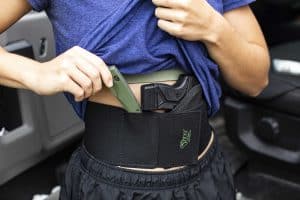
Inside-the-Waistband (IWB) Holsters:
- Pros: Offer excellent concealment and are effective for lighter winter layers like sweaters or fleece jackets. Sticky Holsters’ IWB options stay securely in place thanks to their non-slip material, eliminating the need for cumbersome hardware.
- Cons: Layers like tucked-in shirts or long underwear may make drawing more challenging. Ensuring your setup is free of unnecessary bulk is important in maintaining draw speed as much as possible.
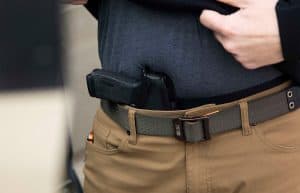
Outside-the-Waistband (OWB) Holsters:
- Pros: Easier to access with heavy layers, OWB holsters are ideal for short jackets or strategically layered outfits.
- Cons: If you’re carrying outside the waistband (OWB) and wearing a thick winter coat, it can be challenging when you are indoors—you can’t simply take off your coat without exposing your firearm. This can limit comfort and concealment in certain settings.
The best way to know what will work best for you is to try both. Testing both options, including Sticky Holsters, will help determine which carry style best meets your needs for versatility, security, and ease of use.
The Role of Shoulder Holsters for Winter Carry
Shoulder holsters offer convenience and comfort for carrying during winter, especially with long coats or jackets. They maintain the awkward and sometimes dangerous aspects of cross-draw, potentially endangering innocent bystanders as you swing the gun 180 degrees from pointing back to being on target. It can also be difficult to train at ranges with a shoulder holster since many range owners are afraid of exactly the circumstance described above occurring.
Pocket Holsters: A Convenient Cold-Weather Option
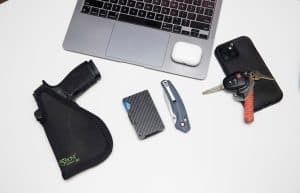
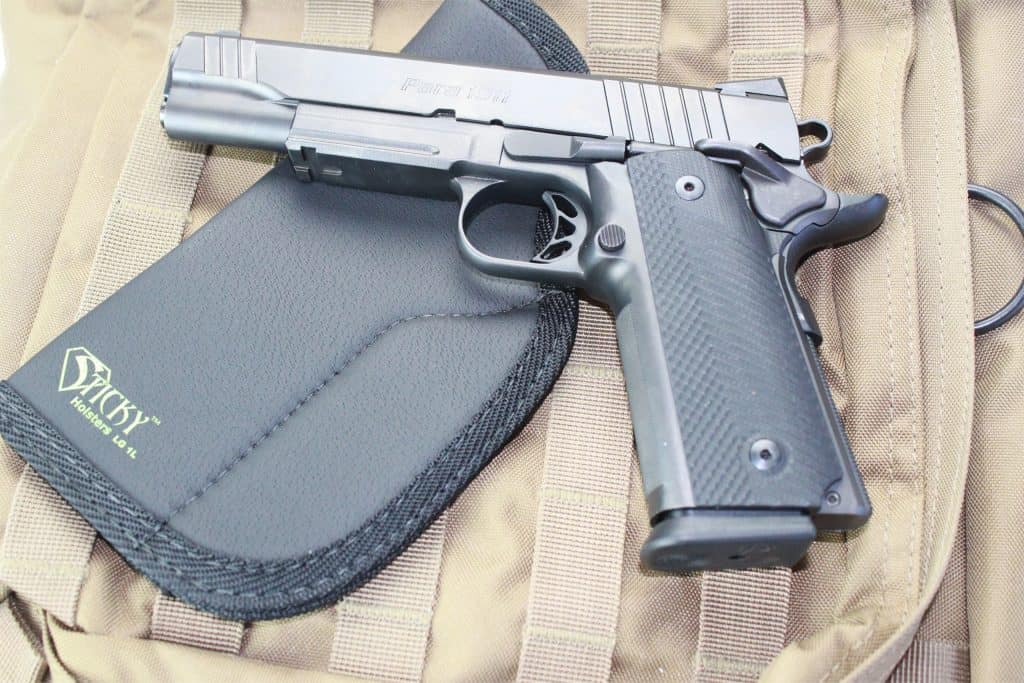
Pocket holsters shine in winter for their accessibility and discreetness, and Sticky Holsters offers standout solutions in this category. Designed with non-slip material, Sticky Holsters pocket holsters ensure your firearm stays securely in place within your coat or pants pocket. Their minimalist design prevents unnecessary bulk, which is especially helpful during cold-weather carry.
Why Sticky Holsters for Pocket Carry?
- Secure Fit: The holster stays put during the draw, ensuring smooth and efficient access.
- Natural Concealment: Sticky Holsters’ slim profile allows your firearm to stay discreet, even in shallow or fitted pockets.
- Adaptability: Whether transitioning from indoor to outdoor environments or shifting between different jackets, Sticky Holsters’ pocket holsters provide unmatched versatility.
Tips for Using Sticky Holsters in Winter:
- Pair your holster with deep, sturdy pockets (and a smaller gun) to ensure maximum concealment and stability.
- Practice your draw regularly to ensure a seamless motion when removing the firearm.
- Keep your pocket exclusively for your firearm—no keys or other objects should share the space.
For those navigating the challenges of cold-weather carry, Sticky Holsters options deliver a balance of comfort, concealment, and quick access.
Clothing Tips for Winter Concealed Carry
Concealed Carry Jackets
A concealed carry jacket is more than just outerwear. If you decide to go this route, look for jackets designed with concealed carry in mind, featuring pockets or compartments that allow easy access to your firearm. Jackets with zippered side vents or built-in holster compatibility may make accessing your weapon faster and more natural.
Lightweight, durable materials that won’t add excessive bulk are ideal. Also, ensure the jacket fits snugly enough to minimize flapping but allows room for a smooth draw.
Adjusting Layers for Comfort and Quick Access
Layering is critical in winter, but excessive bulk can slow your draw or make accessing your firearm challenging. Choose base layers made of lightweight, moisture-wicking materials to stay dry and warm. Add a mid-layer for insulation and an outer layer for protection from the elements.
When layering, consider:
- Keeping your firearm accessible by avoiding tightly zipped mid-layers that make your gun impossible to reach.
- Practicing clearing your layers, drawing, and dry firing to ensure you can reliably get the gun on target.
- Opting for clothing with stretchy or quick-release features to prevent fumbling during an emergency.
Avoiding Common Mistakes with Winter Clothing
Winter clothing can inadvertently hinder your ability to conceal and access your firearm effectively. Avoid these common errors:
- Too Much Bulk: Excessively thick layers can make your gun harder to reach.
- Wrong Fit: Oversized jackets can snag on your holster, while overly tight clothing can restrict movement and increase printing.
- Improper Pockets: Carrying in coat pockets without a holster can lead to misaligned firearms, higher likelihood of accidental discharges, and slower draw times.
For a setup you can consistently sustain both during the course of the day and the entire winter, you should balance warmth, concealment, and accessibility.
Practice Makes Perfect: Drawing From Winter Layers
Dry-Fire Practice With Winter Gear
Dry-fire practice is essential for mastering your draw under winter conditions (yes, that means in the freezing cold for us northerners). Practice clearing layers of clothing to access your firearm smoothly. Focus on:
- Clearing your jacket or outer layers with your support hand when necessary, grabbing the gun, and obtaining the proper grip.
- Drawing from your holster without snagging on fabric.
- Dry-fire on the designated target (remember your four primary rules of firearm safety).
- Reholstering safely without fumbling (even with numbed hands).
Regular practice will build muscle memory, ensuring quick, efficient action in high-stress situations.
Live-Fire Drills for Real-World Conditions
Taking your practice to the range with your winter setup is critical. Wear your full cold-weather gear and replicate real-world scenarios. Include:
- Drawing and firing from concealment under multiple layers.
- Engaging targets at various distances.
- Drawing, shooting and reholstering safely while wearing gloves.
Practice in cold temperatures whenever possible to simulate real-world conditions, and before you ask: yes, practicing with a freezing gun can be painful. We never said being a responsible citizen was all fun, all the time.
Adjusting Your Draw for Gloves and Cold Hands
Wearing gloves adds complexity to handling a firearm. Choose thin, grippy gloves that maintain dexterity while keeping your hands as warm as thin gloves can. Practice these steps at an outdoor range if at all possible:
- Ensure gloves fit snugly to prevent snagging on your firearm.
- Test trigger control with gloves to avoid accidental discharges.
- Develop muscle memory for your draw and reholster movements with gloved hands.
Cold hands can also affect your grip and trigger control. Incorporate drills to maintain accuracy under these conditions.
Strategic Carry Methods for Winter Scenarios
Balancing Concealment and Accessibility
There’s no free lunch, folks: Winter layers can make concealment easier while they compromise accessibility. A strategic approach includes choosing holsters that work well with heavy jackets or coats, such as shoulder holsters or OWB holsters. Regardless of you carry style in winter, keeping your outerwear simple to help clear layers with your support hand should help improve your draw speed.
Position your firearm where you can consistently access it without excessive movement, considering factors like coat length, zippers, and pocket placement. Always test your setup in realistic scenarios to ensure quick and efficient draws.
Preparing for Seated and Vehicle Carry
Winter conditions often require extended periods of seated carry, such as in cars or on snowmobiles. Adjust your setup for these scenarios:
- Cross-Draw Holsters: Easier to access while seated and minimizes the need to twist awkwardly. Unfortunately, this typically violates firearm safety rules since the most natural way to draw will pull the gun over your legs. It seems a trivial detail: “I would nevver shoot myself”, said everyone who later accidentally shot themselves.
- Pocket Holsters: Provide reliable access as long as you can get at your pocket easily. This is particularly helpful in jackets or cargo pants.
- Secure OWB Holsters: Work well under open coats for easy draw while seated, but being seated and buckled in the car may be a different matter.
Practicing your draw from seated positions ensures you can access your firearm safely and quickly, even in restrictive conditions.
Maintaining Your Gear in Winter Conditions
Preventing Rust and Wear From Snow and Salt
Winter conditions expose your firearm and holster to moisture, snow, and (conceivably) even road salt, which can cause rust and wear. Protect your gear by:
- Wiping down your firearm and holster after exposure to moisture.
- Using rust-preventive oil on your firearm’s metal components.
- Avoiding direct contact with road salt, which accelerates corrosion.
Keep your holster stored in a dry, ventilated space when not in use to prevent mildew and material degradation.
Holster Care Tips for Cold and Wet Environments
Winter environments demand extra attention to your holster to ensure it remains functional and secure:
- Sticky Holsters: The non-slip material is moisture-resistant but benefits from regular cleaning to maintain its grip.
- Check Retention: Cold temperatures can affect some holster materials – for example, making Kydex holsters more brittle and liable to snap. Test your holster to ensure it securely holds your firearm.
Sticky Holsters: Versatility for Winter Concealed Carry
Adapting to Layers and Different Carry Positions
Sticky Holsters’ clip-free, non-slip design makes them perfect for adapting to winter’s layered clothing. Whether you carry inside the waistband, in a pocket, or at your ankle, the holster conforms to your setup, ensuring reliable retention across all positions.
The minimalist design prevents bulk, allowing seamless integration with heavier winter garments.
Enhancing Comfort and Retention in Any Outfit
Winter clothing can make drawing from traditional holsters tricky. Sticky Holsters eliminate the need for belts or clips, enhancing comfort while maintaining retention, while also functioning as excellent pocket holsters when the need arises. Their flexible design works with various outfits, from bulky coats to lightweight sweaters, ensuring you stay prepared regardless of your attire.
Staying Safe and Ready in Every Season
Winter concealed carry comes with unique challenges, but proper preparation and reliable gear make all the difference. By selecting a Sticky Holster, designed to adapt to your particular carry preferences and wardrobe, you ensure comfort, accessibility, and retention.
Get your Sticky Holster today!