

What is the best size gun for concealed carry? This is the core question every carrier faces, and the answer depends entirely on your specific needs, lifestyle, and personal preferences. The market is full of conflicting advice. On one side, you have the “bigger is better” camp, prioritizing the performance and capability of a full-size handgun. On the other, you have those who argue that a small, micro-compact pistol is the only practical choice for daily concealment.
This guide is designed to cut through the noise. From the nuances of handgun size and shootability to your personal buying strategy and gear selection, this framework will empower you to make an informed decision that best suits your own defensive plan.
Understanding Handgun Size Categories
Before weighing the pros and cons, it’s essential to understand that “size” is more than just a single measurement, and it can affect both performance and concealment.
Full-Size
These are designed for maximum performance. They typically feature a barrel length of 4 inches or more, a full-size grip that allows all fingers to make contact, and a higher magazine capacity. Full-size pistols are generally the easiest to shoot well.
Compact / Mid-Size
This category represents a popular middle ground, considered by many to be the best of both worlds. A compact pistol attempts (often very successfully) to balance the performance of a full-size gun with the concealability of a smaller one, making it a common choice for those who want a single, versatile handgun.
Subcompact / Micro-Compact
This class of firearm prioritizes deep concealment above all else. Defined by short barrels and abbreviated grips, these pistols are significantly easier for most people to conceal. Modern advancements have allowed some of these micro-compacts to feature higher magazine capacities than previously possible while maintaining a small footprint.
Key Factors Across All Categories
- Weight (Polymer vs. Steel): The material of a handgun’s frame dramatically impacts its weight. A polymer-framed pistol can weigh up to 30% less than a steel-framed one of a similar size. While a heavier gun can help reduce felt recoil, a lighter gun will be far less fatiguing to carry all day, every day.
- Ergonomics (Grip Circumference): Beyond just grip length, the overall circumference and shape of the grip are critical. Many modern pistols feature interchangeable backstraps to better fit a wider range of hand sizes. Some full-size designs, like the 1911, have a relatively slim grip and short trigger reach that can fit smaller hands very well, highlighting the 3-dimensional nature of determining what size gun is right for you.
The Case for a Larger Handgun: Performance and Capability
The primary arguments for carrying a larger firearm are rooted in performance. When it comes to a defensive tool, how well you can use it under pressure is a critical factor, and bigger guns offer several distinct advantages.
Shootability
All other things being equal, the laws of physics tell us that bigger guns are simply easier to shoot well. A larger, heavier firearm reduces felt recoil and makes the impulse less snappy. For new shooters especially this softer recoil is less likely to cause flinching or anticipation of the shot.
A larger grip also allows you to get your entire hand on the firearm, which spreads the recoil force across a larger area and gives you more leverage and control.
For those using iron sights, a longer slide also creates a longer sight radius—the distance between the front and rear sights—which makes it easier to aim with precision. However, it’s important to note that this sight radius advantage becomes largely irrelevant if you plan to use a red dot optic.
Capacity
Larger frames and grips typically have more room for ammunition. A full-size handgun will almost always offer a higher standard magazine capacity than its compact or subcompact counterparts. While most civilian self-defense encounters are low-round count fights, having more ammunition available before needing a reload provides a significant tactical and psychological advantage.
The Accessories Platform
A larger handgun provides more “real estate” for both your hands and for accessories. Full-size pistols usually feature a longer rail, making it easier to mount a wider variety of weapon-mounted lights and optics. As many violent encounters occur in low-light situations, the ability to easily add a light can be a crucial capability that a larger frame better accommodates.
The Case for a Smaller Handgun: Concealment and Practicality
While larger guns may win on the firing line, the reality of daily life for many gun owners often favors a smaller firearm. The arguments for a compact or micro-compact pistol are based on the practical challenges of carrying a gun consistently and discreetly.
Concealability
The single greatest advantage of a small gun is that it’s easier to hide. A shorter grip is less likely to print through clothing, and a thinner frame is less noticeable in this regard. This concealment challenge is often magnified for individuals with smaller body frames; a petite woman, for example, will typically find it much harder to hide a large pistol than a large man will. Regardless of body size and shape, however, staying under the radar is an integral part of concealed carry, and a smaller gun makes living out the “concealed” part of carrying far easier.
Comfort and Weight
A smaller, lighter gun is less fatiguing to carry all day, every day. While the weight of a larger pistol helps manage recoil, that same weight can be a significant drawback when carried on your hip for extended periods. The reduced weight and dimensions of a compact or subcompact pistol can be the difference between a comfortable carry experience and one that feels like a chore.
A Gun in the Hand Is Worth 10 in the Safe
This is perhaps the most critical point in favor of smaller guns. The best handgun for self-defense is the one you have with you when you need it. A common mistake for new buyers is choosing a gun that is too large or heavy for their lifestyle. After a few weeks of inconvenience, that pistol gets left in the car or at home in the safe. A comfortable, easy-to-carry subcompact in your pocket or waistband can still save your life, unlike a full-size pistol you didn’t bring with you. In case you are unsure how much gun you are willing to carry every day, the safer solution is to go small rather than large. It might be a pain to practice with but at least you’ll have it on hand when you want it.
Your Buying Strategy: The ‘One-Gun’ Solution vs. The ‘Specialist’ Approach
There is no single right answer to the question of what size gun to buy, but your decision becomes much clearer when you define your long-term strategy. Are you looking for one handgun to fill every role, or are you planning to acquire multiple firearms for specialized purposes?
Path 1: The One Gun Owner
For the person who wants a single, do-all, jack-of-all-trades gun, the best choice is often a compact pistol on the larger end of the spectrum. This class of firearm offers a good balance between the shootability of a larger gun and the concealability of a smaller one. While it may not be quite as easy to shoot as a full-size firearm or as effortless to conceal as a micro-compact, it can (usually) fill both roles sufficiently, making it an eminently carryable and effective choice.
Path 2: A Gun For Every Situation
For those who intend to buy more firearms down the road, a middle-of-the-road option such as a compact may be suboptimal. If you are already planning or already have multiple guns, it’s reasonable to focus on getting different guns that each do one job excellently rather than some that overlap in function. The recommended strategy here is to start with a full-size handgun. A full-size gun is the easiest platform to learn marksmanship on and will help you build the skills needed to use a smaller gun effectively. This first gun can then be repurposed as a dedicated home defense or competition firearm when you are ready to add a dedicated, smaller concealed carry pistol to your collection.
The Role of Your Concealed Carry System
Regardless of the size of the firearm you choose, your success in carrying it consistently and comfortably will depend on your gear. A quality firearm is only one part of the equation.
The Holster as the Great Equalizer
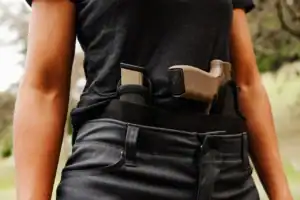
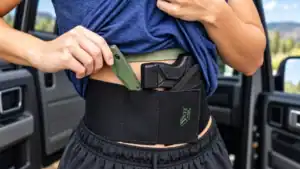
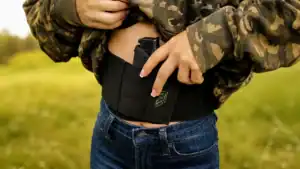
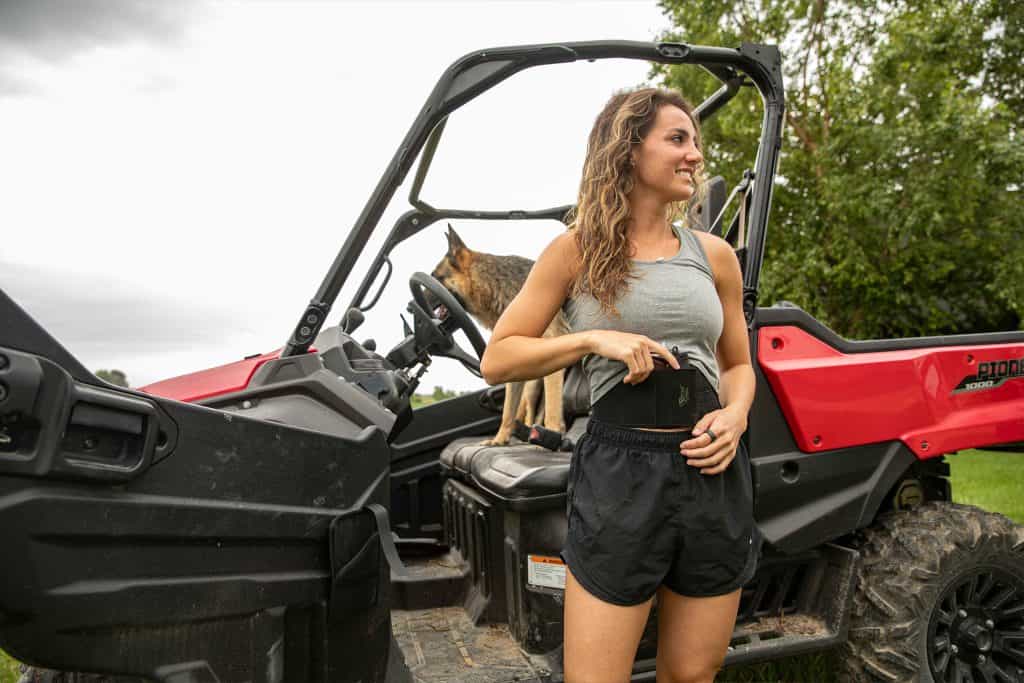
You will need a quality holster, and if needed, something to support it such as a gun belt, garter belt, or belly band. A proper gun system will support the weight of the firearm and keep it securely in place throughout the day. It also provides a firm anchor to pull against during your draw, making your presentation much more efficient and reliable. The holster, in turn, must safely retain the firearm, protect the trigger guard, and be comfortable for daily wear.
The Sticky Holsters Advantage
The right holster helps maximize the advantages and minimize the drawbacks of your chosen firearm size.
- For a larger gun, the primary challenges are bulk, weight, and discomfort. A Sticky Holster’s minimalist, clipless design adds virtually no extra bulk or width to the firearm’s profile, making it significantly easier to conceal.
- For a smaller gun, the primary advantages are concealability and comfort. A Sticky Holster enhances this by adding versatility, allowing for easy switches between multiple carry positions, from inside-the-waistband (IWB) to pocket carry, without needing different clips or hardware, giving you more options to adapt to your clothing and daily needs.
Making an Informed, Personal Choice
In the choice between full-size and compact firearms, there is no solution that is right for everyone. The best choice takes into account all the relevant facts about your unique life: your priorities, lifestyle, workplace, daily attire, body type, and the list could go on. The most important things are to select a quality firearm you can shoot with consistent accuracy, and then carry it consistently. For some, that will be a versatile jack-of-all-trades compact. For others, it will be a dedicated full-size pistol that offers maximum capability or an easily concealable micro compact.
But whether you choose a full-size, compact, or micro-compact, a Sticky Holster is designed to make your carry more comfortable and concealable. Find the perfect fit for your chosen firearm and carry with comfort.