



Choosing the right holster affects how comfortably you carry every day. Belly band holsters and traditional holsters each serve different needs. Understanding these differences in holster positions helps you select the best option for your lifestyle.
Understanding Traditional Holsters
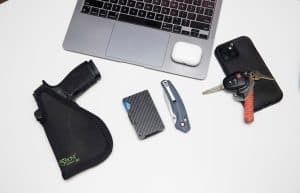
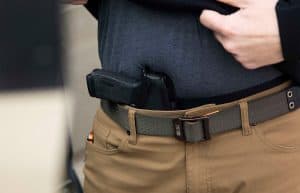
Traditional holsters attach directly to your waistband or belt using clips or loops. They position your firearm on your hip, appendix or behind your back. A sturdy belt keeps them secure, and they work best with pants that have belt loops.
The strength here is simplicity. Clip them on and they stay put. Quick access is a given. If you dress consistently, traditional holsters make sense. Many shooters prefer knowing their firearm sits in the same spot every time.
Limitations exist though. You need appropriate clothing—pants with a belt, typically. Athletic wear won’t work. Dress clothes without belt loops won’t work. Situations where you can’t wear a belt present real challenges. Clips show through thinner fabrics too, which creates discretion problems.
Traditional holsters offer excellent retention through their rigidity. Your firearm won’t shift position throughout the day. This helps maintain consistent draw mechanics. People who train regularly need their muscle memory to translate from the range to daily carry, and that stability delivers.
How Belly Band Holsters Work
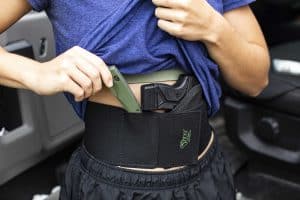
Belly band holsters wrap around your midsection like an elastic band. No clips, no belts, no loops. This lets you carry with virtually any clothing. Gym shorts to formal wear, the design adapts.
People with varied schedules find belly bands appealing because of this versatility. Position your firearm almost anywhere around your waist: appendix, hip, kidney or small of back. Jeans, athletic wear, a suit—the same holster handles all of them.
Specific situations favor belly bands. Physical activity is one. Traditional holsters might shift or print during movement. Women whose clothing doesn’t accommodate standard holsters find them practical, especially those who prefer not to wear belts. The elastic material conforms to your body and distributes weight more evenly than a single clip point does.
Belly bands let you fine-tune tightness and position based on your outfit. A tucked dress shirt might require different positioning than a loose athletic top. This adaptability helps maintain consistent concealment across clothing styles.
Comfort and Concealment Differences
Body type and daily activities determine comfort. Traditional holsters concentrate pressure at clip points. Sit frequently and this pressure becomes uncomfortable. Rigid clips dig into your side during extended wear.
Belly bands distribute weight across a broader area. The elastic material moves with your body. Many find this more comfortable during active days. But some report belly bands feel restrictive in hot weather when the wide elastic band covers more skin.
Traditional holsters work well for concealment with the right clothing. They create minimal bulk. Pants must sit at your natural waistline though. Belly bands hide under a wider range of garments but add thickness around your midsection. Larger firearms make this more noticeable.
Breathability differs between styles. Traditional holsters contact less of your body surface and allow more air circulation. Belly bands cover more area and trap moisture against your skin during summer or intense activity. Some manufacturers use moisture-wicking materials or ventilation designs to address this.
Side-by-Side Comparison
Looking at both holster types together makes the practical differences clearer. This table breaks down how belly bands and traditional holsters perform across key carry factors.
| Criteria | Traditional Holsters | Belly Band Holsters |
| Clothing Requirements | Needs belt and belt loops | Works with any clothing |
| Positioning Options | Fixed to waistband area | Adjustable around entire waist |
| Retention Method | Rigid clips or loops | Elastic compression |
| Concealment Profile | Minimal bulk, specific placement | Broader coverage, more versatile |
| Comfort During Activity | Can shift or dig in | Moves with body |
| Breathability | High (less contact area) | Lower (covers more skin) |
| Best For | Consistent dress, trained draw | Varied wardrobe, active lifestyle |
| Body Type Considerations | May print on thin builds | Can bunch on larger midsections |
Your priorities among these factors will point you toward the right choice.
Choosing Based on Your Lifestyle
Your daily routine should drive your decision. Similar clothing most days? Traditional holsters offer straightforward reliability. The consistent positioning helps develop muscle memory for your draw.
Varied schedules benefit from belly bands. Transitioning from business meetings to the gym requires adaptability. Changing between casual and formal wear does too. Parents who spend time on the floor with kids often prefer belly bands because they stay secure regardless of position.
Body type matters. Traditional holsters can print more on thinner builds unless you carefully select clothing. Larger midsections sometimes cause belly bands to bunch or roll. Testing both styles reveals what works for your body shape.
Think about typical activities. Desk work most of the day? Concentrated pressure points from traditional holsters might bother you more than someone who stands and moves frequently. Constantly active? The distributed support of a belly band might feel more natural during movement.
Sticky Holsters’ Approach to Both Styles
At Sticky Holsters, we manufacture solutions for both carry preferences. Our clip-free traditional holsters use an outer layer that grips your waistband. This eliminates clips that dig into your side or damage clothing. You get positioning consistency with improved comfort.
For flexible waist carry, our belly band holsters offer adjustable positioning and breathable materials. These integrate with our modular approach and let you customize your carry method based on your day’s activities.
You can build out complete modular holster systems that adapt to different situations. This modularity means you’re not locked into one carrying method. Switch based on your clothing, activities or comfort needs.
Visit Sticky Holsters Today
Your carry style should match your life, not the other way around. Browse our selection of traditional and belly band options to find what works for your routine. Made in the U.S., our holsters help you carry comfortably every day. Shop our full collection to find your solution.
FAQs
Can I use a belly band holster for appendix carry?
Yes, belly bands work well for appendix carry. The elastic material wraps around your midsection, so you can position your firearm anywhere along the band, including the appendix area. This gives you consistent access while keeping your firearm secure.
Do traditional holsters work with athletic wear?
Traditional holsters need a sturdy waistband to grip or belt loops for clips. Most athletic wear lacks both, making traditional holsters impractical for gym clothes or running shorts. Belly bands solve this problem by securing around your entire waist without needing a belt.
Which style conceals better under tight clothing?
Traditional holsters typically conceal better under fitted clothing because they create less bulk around your midsection. Belly bands add a layer of elastic material, which can show through very tight shirts. However, belly bands work better if your clothing doesn’t have belt loops or a structured waistband.
Are belly band holsters comfortable for all-day wear?
Comfort varies by person. Some people wear belly bands all day without issue, while others find the elastic restrictive after several hours. The material can trap heat against your skin, which matters in warm climates. Try both styles to see which feels better for your body type and climate.