

Why Holster Selection Matters for Everyday Carry
Selecting the right holster is more than a matter of preference (although that matters too)—it’s a crucial component of responsible firearm carry. The holster you choose impacts your ability to carry your firearm comfortably, access it quickly, and ensure its security throughout the day. For concealed carriers, a suitable holster should provide effective concealment without compromising accessibility. Poor holster selection can lead to discomfort, printing (where the outline of the firearm is visible through clothing), or even unsafe carry or draw scenarios. A well-chosen holster should integrate seamlessly into your daily life, providing peace of mind while enhancing personal safety.
Exploring Different Holster Types and Their Best Uses
Holster designs vary widely to accommodate different lifestyles, environments, and carrying preferences. Whether you prioritize comfort, concealment, or ease of access, there’s a holster type suited to your needs. Let’s explore some of the most popular types and their ideal applications.
OWB Holsters: Ideal for Comfort and Quick Access
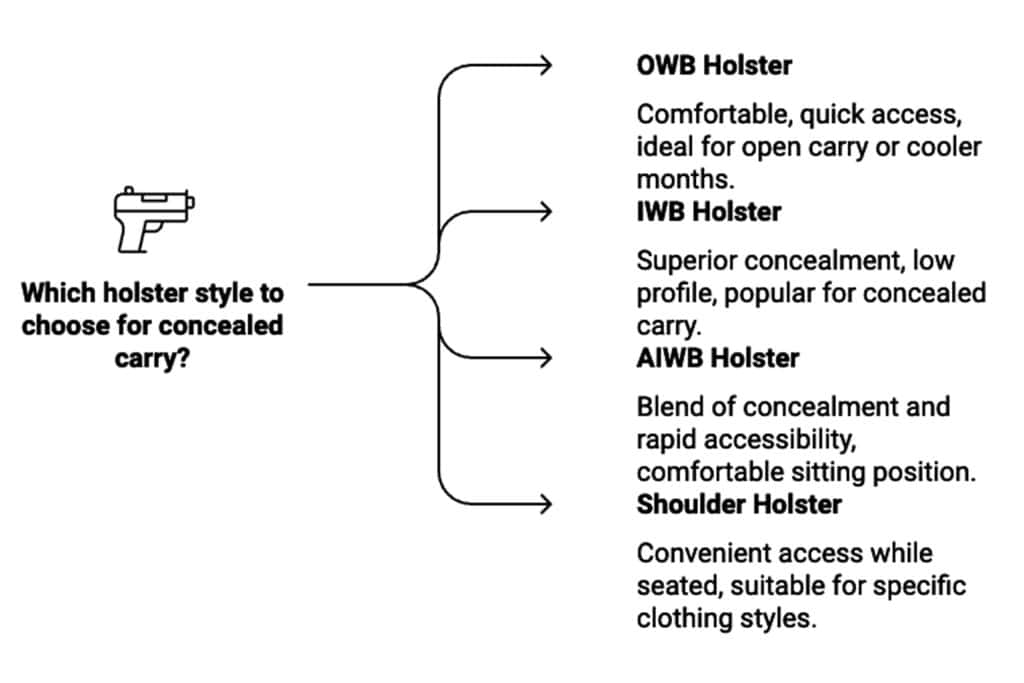
Outside-the-waistband (OWB) holsters are worn on the outside of your pants or belt. They are known for their comfort, as the firearm rests away from the body, reducing pressure and heat. OWB holsters allow for quicker access and a faster draw when not concealed, making them popular with law enforcement and open carriers. These holsters are ideal for scenarios where concealment isn’t a priority or during cooler months when layering clothing can turn an otherwise conspicuous carry method into a concealed choice. OWB holsters can be challenging to conceal under light clothing, such as during the summer months, so they are often favored for open carry or when concealment is secondary.
IWB Holsters: The Top Choice for Year-round Concealed Carry
Inside-the-waistband (IWB) holsters position the firearm inside your pants, offering superior concealment under most clothing. This design is popular among concealed carry permit holders due to its low profile: it makes the firearm virtually invisible to the public. While IWB holsters are typically less comfortable than OWB holsters, particularly when sitting or bending, these holsters allow for excellent concealed carry while maintaining the highest possible amount of access. The right IWB holster balances concealment and comfort by using materials and designs that minimize bulk while still securing the firearm firmly in place. (More on holster materials below.)
AIWB Holsters: Balancing Access and Concealment
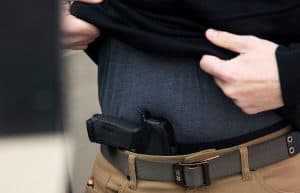
Appendix Inside-the-Waistband (AIWB) holsters are worn in the front, around the 12 to 2 o’clock position, depending on the carrier’s particular body shape. This carry style offers a blend of concealment and rapid accessibility, as the firearm is kept in front of the body for easy monitoring. The position can facilitate a quicker draw compared to other IWB positions as well.
Humans were designed to fight with their hands, so keeping a gun under your watchful eye, where your hands can be brought to bear in a fraction of a second, is the most defensible position in the unusual case that someone tries to grab your concealed carry firearm.
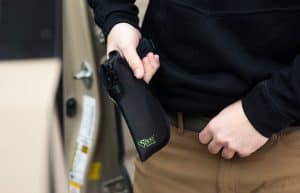
Many users also find that AIWB holsters provide a more natural and comfortable sitting position. However, some carriers may feel uneasy about the firearm’s proximity to the groin area, and proper training on re-holstering your gun is recommended to mitigate potential safety risks. Sticky Holsters eliminate any re-holstering risk because their no clip design allows you to easily pull the holster out, re-holster your gun pointing at the ground but away from your body, and simply “stick” the holster and gun back where it was before.
Shoulder Holsters: A Niche Option for Specific Needs
Shoulder holsters suspend the firearm under the arm opposite your dominant hand, secured with straps that distribute the weight across your shoulders. These holsters are well-suited for situations where belt carry is impractical, such as when wearing certain types of clothing (suits, jackets, or some winter coats). Shoulder holsters also offer convenient access while seated, making them popular among drivers. However, they come with safety considerations: when drawing, the muzzle may sweep across innocent bystanders, requiring extra caution during practice and use. While not as widely used today, shoulder holsters still serve niche roles for specific dress styles and environments.
Ankle Holsters: For Backup Guns and Deep Concealment
Ankle holsters are commonly used to carry backup firearms or for deep concealment needs. They wrap around the lower leg and are generally best suited for small, lightweight handguns that can be easily concealed beneath pant legs. Ankle carry is advantageous as a primary carry for those who spend much of their time seated, such as those who work desk jobs, as the firearm remains accessible in a sitting position. However, drawing from an ankle holster is typically slower compared to waistband holsters, and in a close-quarter combat situation, bending down to reach your gun can put you in a very compromising position, making you more vulnerable to many attacks. As a result, ankle holsters are typically used as a secondary, “just in case” carry option rather than the primary means of defense.
The Impact of Holster Materials on Performance
The material of a holster plays a crucial role in its overall performance, including comfort, durability, retention, and concealment. Each material offers unique benefits and trade-offs that can impact your experience based on your carry style and preferences. Now it’s time to explore the different holster materials and their characteristics.
Leather Holsters: Classic and Comfortable
Leather holsters have a longstanding tradition in the world of firearm carry. Their classic look and feel appeal to many enthusiasts who appreciate the material’s durability and timeless aesthetic. Leather molds to the shape of your firearm over time. It also offers a quieter draw compared to other materials, which you can imagine might be advantageous in tactical scenarios, although those are certainly not the typical self-defense scenario. However, leather is a natural material and requires maintenance. Additionally, leather holsters may not provide the same level of precision retention as synthetic materials like Kydex.
Kydex Holsters: Durable and Reliable
Kydex is a popular thermoplastic material known for its rigidity and durability. It retains its shape, unlike leather holsters, ensuring consistent performance without the need for break-in periods. Kydex holsters are often preferred for their superior retention, as they can be molded to fit specific firearm models precisely. This tight fit creates a “click” sound when the gun is fully seated in the holster, providing an audible confirmation of secure retention. As a type of plastic, Kydex is not damaged by water and does not require maintenance (although any screws that are in the holster may rust), making it a practical choice for everyday carry. However, some users may find Kydex less comfortable than leather due to its hardness and lack of flexibility. It was not made for comfort.
Hybrid Holsters: A Mix of Comfort and Retention
In an attempt to address the uncomfortableness of Kydex, hybrid holsters aim to combine the benefits of different materials, typically featuring a Kydex shell mounted on a leather or fabric backing. This design is designed to offer the comfort of leather with the retention and durability of Kydex. The backing rests against the body, providing a softer and hopefully more comfortable feel, while the Kydex shell ensures secure retention. However, hybrid holsters may require more maintenance than all-Kydex models, as the leather backing can wear out over time and affect retention. Additionally, hybrid designs may not provide the same level of precision retention as full Kydex holsters.
Sticky Holsters: Unique Material for Enhanced Grip and Versatility
Here at Sticky Holsters, we offer a different approach to carry with our innovative use of a non-slip material. The exterior of a Sticky Holster is made from a soft synthetic rubber that provides significant grip against the waistband or pocket. This unique material allows the holster to stay securely in place through friction, without the need for clips or loops. The material molds to your body and firearm over time, further enhancing the fit. Sticky Holsters offer a lightweight and versatile carry solution that can be used in multiple positions, making them an excellent choice for those seeking comfort and adaptability in their everyday carry.
How Sticky Holsters Use Non-Slip Material for Secure Carry
The hallmark feature of Sticky Holsters is their non-slip outer material, which creates friction against the body, clothing, or pocket to keep the holster in place. The combination of a “sticky” outer skin and a closed-cell foam interior holds both the firearm and the holster securely, even without traditional attachment methods like clips or straps. As you carry, body heat and pressure help conform the holster to the shape of your gun, offering a custom fit. This design allows you to adjust the position of the holster easily while maintaining reliable retention throughout the day.
The Benefits of Sticky Holsters for Multiple Carry Positions
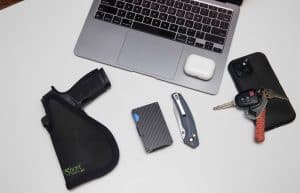
Sticky Holsters excel in versatility, allowing for multiple carry positions to suit your preferences and lifestyle. They can be used inside the waistband (IWB), in the pocket, or with accessories like an ankle rig or belly band for additional carry options. The lack of clips or loops makes Sticky Holsters particularly advantageous for those who prefer minimalist carry setups or need to switch positions frequently. This flexibility also accommodates changes in clothing or activities throughout the day, ensuring you can carry comfortably in different scenarios.
Maintenance Tips to Keep Your Sticky Holster Performing at Its Best
To maintain the performance and longevity of your Sticky Holster, regular cleaning is essential. Follow these maintenance tips:
- Clean with a Damp Cloth: Wipe down the holster using a damp cloth with mild detergent (such as Murphy’s Oil Soap) to remove dirt, sweat, and oils.
- Avoid Abrasive Cleaners: Do not use harsh chemicals or abrasive materials that could damage the material.
- Let It Air Dry: After cleaning, allow the holster to air dry overnight.
- Store Properly: Avoid storing your holster in extreme temperatures or direct sunlight for extended periods, as this can affect the material’s grip over time.
Understanding Holster Retention and Its Importance
Holster retention refers to the holster’s ability to securely hold the firearm in place, preventing it from falling out or being taken during physical activity. Retention is a critical factor for anyone carrying a firearm, as it directly impacts safety, accessibility, and peace of mind. A well-designed holster balances retention with ease of access, ensuring that your firearm is secure during routine movements but can still be drawn quickly when needed. Understanding the different types of retention mechanisms and their effectiveness can help you choose the right holster for your lifestyle and carry preferences.
What Is Retention and Why It Matters
Retention in a holster is the capacity to keep the firearm securely in place until it is intentionally drawn. Proper retention is crucial because it prevents the firearm from dislodging during physical activities such as running, bending, or grappling. It’s good to remember that a gunfight is still a fight, and may start or end with a physical altercation. Retention also helps protect against unauthorized access by others in situations where someone might attempt to grab your gun. Retention systems vary from simple friction fits to more complex locking mechanisms used by many police officers, allowing you to choose a holster that meets your specific security and accessibility requirements.
Retention Mechanisms: From Friction Fit to Locking Systems
There are several types of retention mechanisms used in holsters, each offering different levels of security and ease of access:
- Friction Fit: This is the simplest form of retention, where the tight fit of the holster material against the firearm creates friction to hold the gun in place. It is common in many Kydex and leather holsters and allows for a smooth draw.
- Retention Screws: Some holsters feature adjustable retention screws, which increase or decrease the tension around the firearm, allowing the user to customize the level of retention.
- Passive Retention: This mechanism relies on the shape of the holster and the tension of the material to hold the firearm securely. It’s common in form-fitted Kydex holsters where the molded shape provides a snug fit.
- Active Retention: Active retention involves mechanical devices, such as thumb breaks, push-button releases, or locking systems that require manual disengagement to draw the firearm. These mechanisms offer higher security but may slow down the draw.
- Level Systems: Some holsters are categorized by retention levels, such as Level 1, 2, or 3. Higher levels indicate more layers of security, with Level 3 holsters often used by law enforcement due to their advanced retention features.
Choosing the right retention level depends on your daily activities and the environment in which you carry, with higher retention levels providing more security but potentially slower access.
Comfort vs. Concealment: Finding the Right Balance
When it comes to daily carry, finding the right balance between comfort and concealment is essential. A holster that prioritizes comfort without proper concealment may lead to “printing” (the firearm’s outline showing through clothing), while a holster focused solely on concealment may become uncomfortable during extended wear. A suitable holster should provide enough comfort to be worn throughout the day while effectively concealing the firearm, regardless of your movements or body position.
Factors Influencing Holster Comfort
Several factors can affect the comfort level of a holster:
- Material: Soft materials like leather, fabric, or Sticky Holsters’ proprietary material tend to be more comfortable against the skin, while rigid materials like Kydex accentuate the already hard and uncomfortable aspects of handguns.
- Shape and Design: The holster’s contours and edges should be smooth and rounded wherever possible to avoid digging into the skin.
- Position: Different carry positions, such as IWB, AIWB, or OWB, offer varying levels of comfort based on body type and activity level. For example, AIWB holsters can be more comfortable for those who spend much time sitting, but less comfortable when squatting or bending down. Sticky Holsters do not use a clip to stay secured, which means they can be easily switched from AIWB to any other IWB position.
- Body Shape: A person’s build can affect how well a holster fits. For example, individuals with a larger waist may find IWB holsters less comfortable.
Tips for Optimizing Concealment
Achieving effective concealment requires more than just selecting the right holster; it also involves strategic clothing and positioning choices:
- Clothing Choices: Wear loose-fitting or patterned clothing to help conceal the firearm’s outline. Darker colors also tend to conceal better than light-colored fabrics.
- Holster Positioning: Experiment with different positions to find one that maximizes concealment while remaining comfortable. For example, shifting an IWB holster from the 3 o’clock to the 4 o’clock position may improve concealment.
- Minimize Bulk: Choose a holster with a low profile to reduce printing. Some holsters are designed with features like wedges or wings to tilt the firearm inward, further enhancing concealment.
- Adjust Holster Cant: Some holsters offer adjustable cant, allowing you to change the angle of the grip relative to the ground. Changing the cant of the holster can help to customize your concealment to better fit your body and clothing style, as well as improving the firmness of your grip as you draw the gun.
Essential Safety Features Every Holster Should Have
A reliable holster should incorporate specific safety features to ensure the secure and responsible carry of your firearm. These features help prevent accidental discharges and ensure the firearm remains in a consistent, accessible position.
Trigger Guard Coverage
A critical safety feature of any holster is complete coverage of the trigger guard. This prevents anything from accidentally engaging the trigger while the firearm is holstered, reducing the risk of unintentional discharges. Holsters with open trigger guards should be avoided, as they do not provide adequate protection during normal activities or in the event of a fall.
Ensuring Consistent Gun Orientation
A well-designed holster should keep the firearm in a stable and consistent orientation, preventing it from shifting positions throughout the day. This stability helps maintain a smooth draw when you need it, reducing the risk of an accidental discharge during handling. The holster should also maintain the firearm’s grip in a position where it is easy to grasp and draw quickly in case of an emergency.
Making an Informed Holster Choice for Your Needs
Choosing the right holster involves more than just picking a style that looks appealing. It requires a careful balance of comfort, concealment, accessibility, retention, and safety features tailored to your daily lifestyle and personal preferences. The best holster is one that integrates seamlessly into your routine, providing secure firearm retention while allowing for quick and easy access when needed. Consider the various holster materials, carry positions, and retention mechanisms available, and weigh these factors against your specific needs to find an ideal match for your everyday carry. Remember, a comfortable and reliable holster increases the likelihood that you will carry your firearm consistently, making it an essential part of responsible gun ownership.
Why Choose Sticky Holsters for Your Carry Solution
Sticky Holsters provide a unique solution for firearm carry, combining simplicity with innovative design to meet the needs of everyday carriers. Unlike traditional holsters that rely on clips or loops, Sticky Holsters use a non-slip material that adheres to your waistband, pocket, or skin through friction and compression. This approach offers versatility and comfort, making Sticky Holsters an excellent choice for those who want a secure, adaptable, and comfortable carry experience. Here’s why Sticky Holsters stand out from the competition:
Innovative Features of Sticky Holsters
Sticky Holsters are crafted from a proprietary non-slip material that keeps the holster securely in place without the need for bulky hardware. The outer layer is a grippy, synthetic rubber that adheres to almost any surface, while the inner closed-cell foam conforms to the shape of your firearm over time, creating a custom fit. Some key features include:
- Clipless Design: The absence of telltale clips or loops allows for a more streamlined and even more concealed profile, as well as reducing bulk and enhancing comfort.
- Modular Use: Sticky Holsters can be used in multiple carry positions, such as IWB, pocket, belly band, or ankle carry, thanks to their versatile design and our belly band and ankle systems.
- Custom Fit Over Time: With continued use, the holster molds to the shape of your gun, improving retention and comfort.
- Lightweight and Low Profile: Sticky Holsters weigh less than 3 ounces, making them an ideal choice for those who prioritize lightweight carry solutions.
Versatility Across Different Carry Methods
One of the standout benefits of Sticky Holsters is their ability to adapt to various carry methods. Whether you prefer inside-the-waistband carry for discreet concealed carry, pocket carry for convenience, or ankle carry as a backup option, Sticky Holsters can accommodate your needs. The same holster can be used across different positions with our other Sticky products, such as the Belly Band or AnkleBiter Rig, to expand your carrying options even further.
Real-World Feedback from Sticky Holster Users
Sticky Holsters have garnered a loyal following due to their practical design and reliable performance. Users consistently praise the comfort and versatility of the holsters, with many noting that the absence of clips or bulky hardware makes a noticeable difference in daily wear. The ability to carry in multiple positions is another highlight, allowing users to switch between IWB, pocket, or ankle carry based on their activity or attire. Real-world feedback has also emphasized the custom fit that develops over time, with the holster gradually conforming to the shape of the firearm for improved retention. Users appreciate how Sticky Holsters provide a secure carry solution without sacrificing comfort or accessibility.
Sticky Holsters offer an innovative and adaptable approach to everyday carry, making them a top choice for firearm owners who value simplicity, comfort, and versatility. Find a Sticky Holster for your gun today!