




Staying Informed to Protect Your Second Amendment Rights
As a responsible gun owner, staying informed about concealed carry laws is essential to safeguarding your Second Amendment rights. With gun legislation constantly evolving at the state and federal levels, legal changes can significantly impact your ability to carry a firearm for self-defense. Laws that are apparently intended to increase public safety often place additional burdens on law-abiding citizens, making it critical to understand how each new regulation affects your rights.
Staying up-to-date on changes helps you remain compliant with the law while also ensuring that you can continue to exercise your right to bear arms as effectively as possible within the confines of the law.
Why Responsible Gun Owners Should Keep Up with Legal Changes
Gun owners, particularly those who carry concealed, have a vested interest in keeping up with legal changes for several reasons. Firstly, complying with current laws ensures that you avoid unnecessary legal trouble, which could jeopardize your right to own and carry firearms. Secondly, understanding the nuances of state and federal regulations allows you to navigate concealed carry policies more effectively, particularly when traveling across state lines where laws may differ significantly.
Moreover, as laws are amended or new legislation is introduced, knowing the specifics can help you engage in meaningful advocacy to oppose restrictions that unfairly target law-abiding citizens. Being proactive about legal changes means being prepared to adjust your carry practices and habits as needed to protect yourself, your family, and your rights.
Breaking Down Concealed Carry Policies: What “Shall Issue” and “Constitutional Carry” Mean for Your Rights
Concealed carry policies across the United States can significantly impact your ability to carry a firearm for self-defense. As of now, concealed carry laws fall into two primary categories: “shall issue” and “constitutional carry.” Understanding these differences is crucial for knowing where your rights are supported or restricted.
How Permit Policies Impact Your Ability to Carry for Self-Defense
- Shall-Issue: In “shall issue” states, such as Colorado, the process for obtaining a concealed carry permit is standardized. If applicants meet the necessary requirements—typically including a background check and firearms training—the state must issue the permit. This approach ensures that there is no subjective discretion in the process, providing predictable outcomes for lawful citizens who wish to carry for self-defense. Meeting the requirements guarantees the issuance of a permit.
- Constitutional Carry: States with constitutional carry laws, such as Louisiana and South Carolina, do not require a permit to carry a concealed firearm. These states recognize the Second Amendment as sufficient authorization for carrying firearms, meaning residents can legally carry concealed weapons without going through the permit application process. However, some restrictions may still apply, such as prohibitions in certain locations (e.g., schools, government buildings) or for individuals who are otherwise disqualified from possessing guns under state or federal law.
Concealed Carry Reciprocity
Permitless carry, or “constitutional carry,” allows lawful citizens in certain states to carry concealed firearms without a permit. However, even in states that have adopted this approach, obtaining a concealed carry weapons (CCW) permit can still be beneficial. A permit provides advantages that extend beyond the boundaries of permitless carry laws.
Ensuring Your Right to Carry Across State Lines
One of the most significant benefits of having a CCW permit, even in a permitless carry state, is the ability to legally carry across state lines. Reciprocity agreements between states recognize the validity of permits issued in other states, allowing gun owners to legally carry their firearms while traveling. Without a CCW permit, your right to carry could be limited when crossing into states that do not recognize constitutional carry but do honor permits.
For example, while South Carolina and Louisiana have joined the growing list of permitless carry states, traveling to neighboring states may still require a valid permit. If you intend to carry your firearm during interstate travel, it is crucial to know which states recognize your permit and understand the specific laws in those jurisdictions.
How Reciprocity Agreements Affect Gun Owners Traveling with Firearms
Reciprocity agreements can be complex and vary widely from state to state. Some states honor permits issued in any state, while others only recognize permits from states with similar training and background check requirements. When traveling, it’s essential to research each state’s reciprocity laws and comply with their specific requirements.
Having a CCW permit can significantly expand the number of states where you can legally carry a firearm. This legal protection helps ensure you are not inadvertently breaking the law while traveling and provides peace of mind that your right to self-defense is preserved, even outside your home state. For gun owners who frequently travel, obtaining and maintaining a valid CCW permit remains a practical and legally sound choice.
The Growth of Permitless Concealed Carry
Permitless concealed carry, also known as “constitutional carry,” reflects the interpretation of the Constitution that the right to bear arms should not require government permission. This approach aligns with the obvious meaning of the Second Amendment, which guarantees the right of citizens to keep and bear arms. The growth of permitless carry legislation in the U.S. signals a shift toward recognizing that self-defense is a fundamental right, not a special privilege granted by the state to individuals as it chooses.
As of 2024, 29 states now allow permitless concealed carry, making it easier for law-abiding citizens to defend themselves without navigating a maze of permit applications, fees, and wait times.
New States Adopting Permitless Carry: South Carolina and Louisiana
In 2024, South Carolina and Louisiana became the latest states to adopt permitless concealed carry laws. For residents in these states, the new laws mark a significant victory for Second Amendment supporters. As of July 2024, Louisianans are able to carry concealed firearms without a permit, joining South Carolina in expanding the freedom to carry for self-defense. This shift makes it easier for responsible gun owners to exercise their rights and highlights the broader trend toward reducing restrictions on concealed carry across the nation.
Understanding What Permitless Carry Means and Common Restrictions That Still Apply
While permitless carry laws allow individuals to carry concealed firearms without a permit, certain restrictions continue to apply. These laws do not override federal or state prohibitions against firearm possession for individuals with felony convictions, domestic violence restraining orders, or other disqualifying conditions. Permitless carry also does not extend to all locations within a state; many states still restrict firearms in schools, government buildings, and private businesses that choose to prohibit weapons.
Even in constitutional carry states, it’s crucial for gun owners to understand the specific restrictions that apply to avoid unintentional legal violations. Carrying a concealed firearm without a permit may still be illegal in certain circumstances, making it essential for responsible citizens to stay informed about the details of their state’s laws.
New Challenges for Gun Owners
While many states are expanding concealed carry rights, others continue to introduce stricter gun control measures that present new challenges for lawful gun owners. High-control states often impose additional requirements for concealed carry permits or designate more areas as “sensitive locations” where firearms are prohibited. This approach can complicate everyday carry for those who rely on firearms for self-defense, forcing them to navigate a patchwork of regulations that limit their ability to exercise their rights.
California
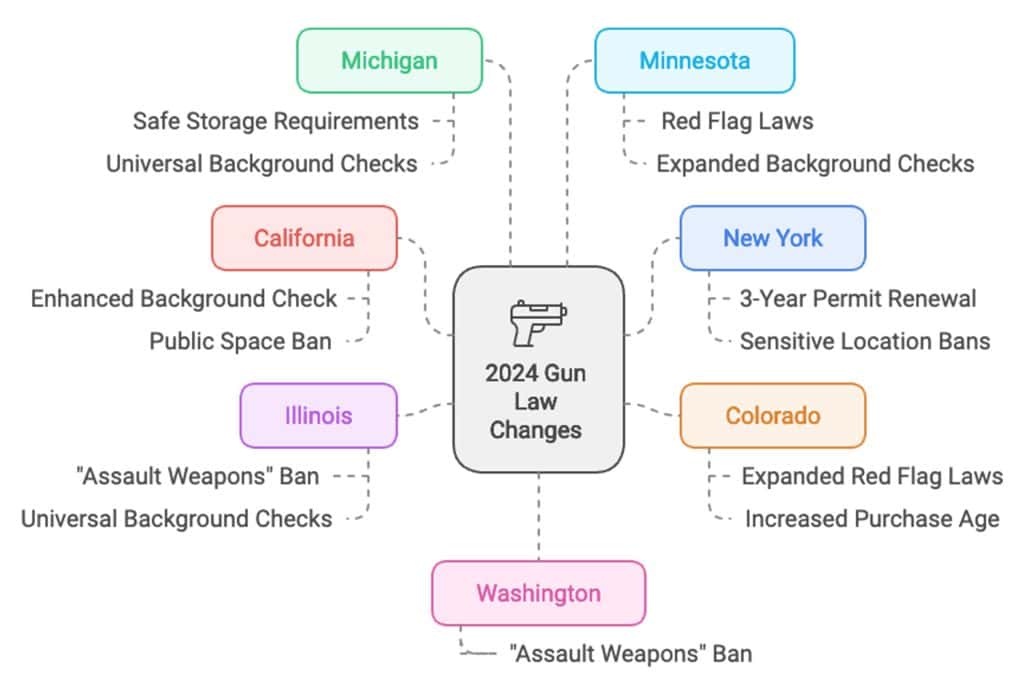
In 2024, California added further restrictions to its already complex concealed carry laws. The state introduced a new requirement for an enhanced background check before issuing permits, in addition to the existing steps of firearms training and safety courses. This added bureaucratic layer makes it more difficult for responsible citizens to obtain a permit, especially in jurisdictions where the approval process is already subject to significant delays.
Moreover, California’s new law banning firearms in 26 public spaces, even for permit holders, further limits where citizens can legally carry for self-defense. Prohibited locations include amusement parks, public parks, museums, and places of worship, among others.
New York
In New York, updates to concealed carry laws have continued to tighten regulations for gun owners. The state now requires permit holders to renew their concealed carry permits every three years, a reduction from the previous five-year period. The mandatory renewal process adds an additional burden for permit holders, particularly in a state known for its restrictive stance on gun rights.
The introduction of more “sensitive location” bans has made it increasingly difficult to carry legally in New York. Guns are prohibited in areas like Times Square, hospitals, and schools, which can complicate daily life for those who carry for personal protection. These expanded restrictions may make it harder for responsible gun owners to stay compliant with the law, leading to potential legal pitfalls and more opportunities for accidental non-compliance.
Other Gun Law Changes in 2024
While many new gun laws claim to enhance public safety, their true impact on lawful gun owners often raises concerns. Several states have introduced restrictive legislation in 2024, making it harder for responsible citizens to exercise their Second Amendment rights.
Colorado
In 2024, Colorado expanded its red flag laws, making it easier for courts to temporarily confiscate firearms from individuals deemed a risk to themselves or others. While proponents argue that these laws help prevent violence, critics contend that they lack due process protections, allowing firearms to be seized based on accusations without clear evidence of wrongdoing. This expansion raises concerns that law-abiding citizens could be unfairly targeted by disgruntled neighbors, estranged partners, or others who may misuse the system to deprive individuals of their rights.
The state also increased the minimum age for purchasing firearms to 21 and introduced a mandatory three-day waiting period for all firearm purchases.
Illinois
In 2024, Illinois enacted the Protect Illinois Communities Act, which includes an assault weapons ban and new regulations on the sale and registration of specific firearms and magazines.
Additionally, the law mandates universal background checks for all firearm sales and restricts private gun sales.
Michigan
Michigan’s new gun laws for 2024 include universal background checks and safe firearm storage requirements aimed at preventing access to firearms by minors. The safe storage mandates, in particular, impose strict requirements on gun owners, potentially penalizing those who fail to meet specific criteria, even in cases where no harm has occurred.
Minnesota
Minnesota’s 2024 gun law changes include expanded background checks for firearm purchases and the introduction of red flag laws. The new red flag laws, like those in Colorado, raise due process concerns and may lead to firearms being confiscated based on accusations without sufficient evidence.
Washington
Washington state’s 2024 legislation includes a ban on “assault weapons”, restricting sales, manufacturing, and distribution of these firearms, potentially affecting many law-abiding gun owners who wish to use these rifles for hunting, target shooting, or home defense.
Strategies for Staying Compliant While Protecting Your Rights
Amid evolving gun laws, responsible gun owners must find ways to stay compliant without compromising their ability to defend themselves. Understanding state-specific regulations is essential, especially if you travel frequently or live in a state with shifting gun policies.
Knowing the Laws
To remain legally compliant while protecting your rights, it is crucial to research and understand the specific gun laws in your state and any states you plan to visit. Make it a habit to check for updates to gun regulations periodically, especially if there have been recent legal changes.
The Second Amendment in a Changing Legal Landscape
The fight to protect and uphold Second Amendment rights is an ongoing challenge, especially in a constantly changing legal landscape. As some states continue to introduce restrictive gun laws, responsible gun owners must remain vigilant and advocate for their rights. Ensuring the continued ability to carry for self-defense requires not only staying informed but also participating in efforts to promote fair legislation that respects the right to bear arms.
Concealed Carry and Sticky Holsters
As concealed carry laws continue to evolve across the United States, it’s essential for gun owners to stay informed and ensure they are equipped with the right tools for self-defense. Regardless of whether you live in a “shall issue” or constitutional carry state, having a reliable, comfortable, and versatile holster is crucial for carrying your firearm safely and legally.
Sticky Holsters offers a range of high-quality, innovative holsters designed to meet the needs of responsible gun owners. With a proprietary non-slip material, Sticky Holsters provide secure retention without the need for clips or bulky attachments, making them ideal for concealed carry in any situation.
Stay prepared and confident with a holster that adapts to your lifestyle. Explore our selection of Sticky Holsters and find the perfect fit for your firearm today. Find a Sticky Holster for your gun and ensure you’re always ready whenever you carry!