

You picked your holster carefully. You tried it on, adjusted the position, checked it in the mirror. It felt good. Then, a couple of weeks into actually carrying it, something changed.
Concealed carry comfort problems rarely show up on day one. They show up on day twelve, or after the third long shift at a desk, or the first afternoon spent on your feet instead of sitting. Research published in the Annals of Occupational and Environmental Medicine on officers wearing gear against the body for full shifts found that discomfort consistently concentrated at the same three zones across every setup tested: the chest, shoulders, and hips, exactly where carry gear presses against the body for hours at a time.
A related study cited in that same research found something even more telling: a redesigned load-bearing vest was rated more comfortable on average than a standard duty belt, yet a third of officers still said they would not choose to wear it again, because of discomfort and restricted movement that only showed up over a full day of use.
Police carry more gear than a single concealed handgun, body armor, a radio, and a baton included. But the pattern holds at a smaller scale too. Comfort measured in the moment does not predict comfort measured in hours.
Comfort Is Cumulative, Not Immediate
Comfort is not a single moment you either hit or miss. It builds, or breaks down, over hours. A quick check in the mirror, or even a full morning of moving around the house, tells you almost nothing about how the same setup feels eight hours later at a desk, in the car, or standing in line.
That is the gap most advice misses. It focuses on choosing a comfortable setup and stops there, as if comfort were a fixed property of the gear rather than something that changes as your body, your posture, and your day change.
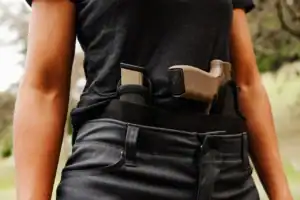
The chest, shoulder, and hip pattern from the research above shows up precisely because those are the points of sustained, direct contact, and sustained contact drives discomfort, not the initial fit. It is also part of why clip-free designs, without a hard clip anchoring the holster to one spot, tend to distribute that sustained contact differently than a setup built around a single rigid attachment point.
Micro-Pressure Points and Movement Fatigue
Discomfort rarely starts as pain. It starts as a small, specific pressure point, against the hip bone, along the waistband, at the edge of a grip against your side, that goes unnoticed for the first hour because your attention is elsewhere.
The problem compounds with movement. Sitting concentrates pressure differently than standing. Bending forward shifts a holster’s position without you realizing it. Every small compensation you make, shifting your weight, angling your hips, holding an arm slightly differently, is something your body was not doing that morning.
By the afternoon, those compensations add up to genuine fatigue, which is why a setup that felt fine at nine can feel wrong by three even though nothing about the gear itself changed. The material behind a holster matters here too; an inner layer of closed-cell foam absorbs and cushions these small shifts differently than a hard shell pressed directly against the body.
The Stability Problem: When Your Setup Won’t Stay Put
A holster that shifts throughout the day creates its own kind of discomfort, separate from pressure. Every time it needs repositioning, consistency in where the firearm actually sits gets lost, and that uncertainty becomes its own low-grade source of tension.
With clip-free, friction-based holsters, the most common cause of shifting isn’t the design; it is what has built up on the surface. Body oil and everyday dirt reduce how well a non-slip material grips a waistband or clothing over time. The fix, in that case, isn’t a new holster. Clean the one you already own with a damp cloth and a small amount of mild detergent; this restores grip without replacing the gear, and it’s worth checking before assuming a setup has failed outright.
Why Clothing Works Against Your Setup
Holster choice gets most of the attention, but clothing does a lot of the work, or the sabotage. Tight waistbands create their own pressure traps independent of the holster underneath. Stiff fabric restricts the small movements a body makes to redistribute pressure naturally throughout the day. Heat and sweat change how anything reliant on friction or grip performs, which matters more in summer than most people plan for.
A holster that works well in January can behave differently in July, not because the holster changed, but because everything around it, fabric weight, humidity, how often a shirt needs adjusting, did. This matters more for clip-free, friction-based holsters specifically, since grip comes from the fabric and waistband cooperating with the material rather than from a hard clip that holds its position regardless of what is worn over it.
Why “Comfortable at Home” Doesn’t Predict All-Day Comfort
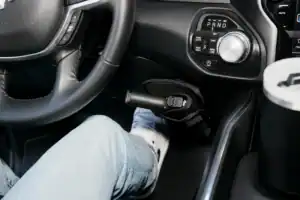
Most comfort testing happens the same way: try it on, walk around the house for a few minutes, decide. That test measures almost nothing that matters. A body’s position changes constantly throughout a real day; sitting compresses the torso, walking shifts weight distribution, driving changes hip angle, and a setup tested in one static position has never been tested against any of that.
Real comfort only shows up after a full day across multiple activities, not a five-minute trial in a controlled environment. That is especially true for a holster that relies on grip and stickiness rather than a rigid shell, since that kind of material responds to body heat and movement that a five-minute stand in front of a mirror never generates.
That is an uncomfortable thing to hear after already committing to a setup, but it is also the most useful diagnostic available. Without a full day behind it, there is no way to know yet whether a setup truly works.
How to Fix Comfort Breakdowns Without Starting Over
Fixing comfort issues rarely means replacing everything. A few targeted changes usually address the root cause.
Spread pressure instead of concentrating it. A thin cushioning layer between a hard holster edge and the skin can eliminate a specific pressure point without changing anything else about the setup.
Fix instability before repositioning. If a holster is shifting, solve that first, since a stable holster in a slightly imperfect position beats an unstable one in a perfect position.
Match the setup to the actual day. Someone at a desk eight hours a day has different pressure points than someone on their feet or driving most of the day, and the right position often depends more on movement pattern than body type.
Make small adjustments, not major overhauls. A slight change in ride height or cant angle solves more comfort problems than switching holster types entirely.
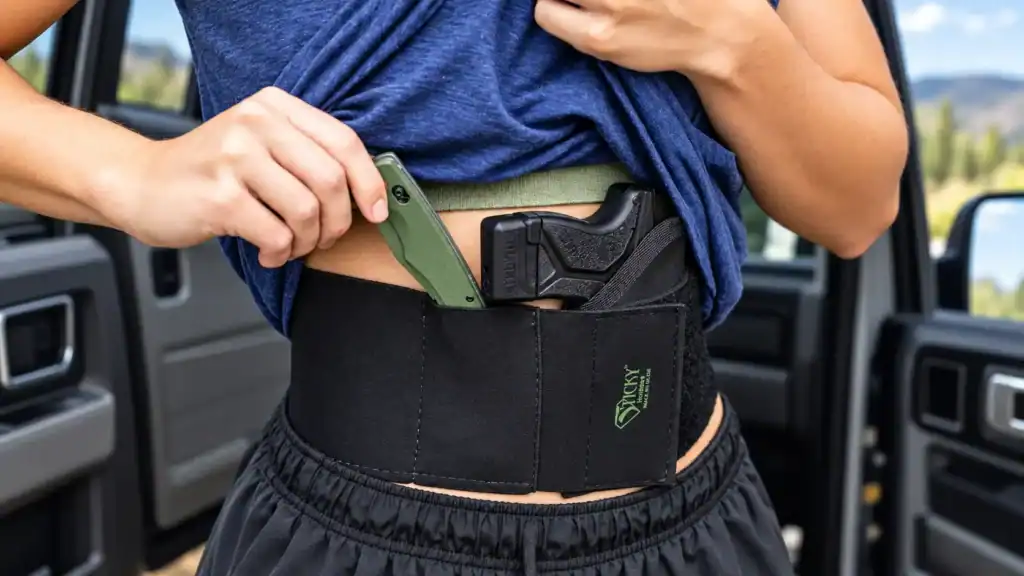
For carriers who want a beltless, wrap-style option that spreads contact across a wider area instead of one narrow line at the waistband, it is worth testing for desk-heavy days or situations where a traditional waistband setup isn’t practical.
Built for All-Day Wear, Not the Try-On
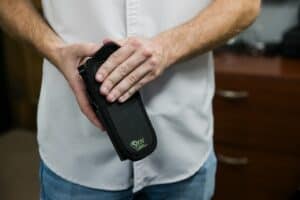
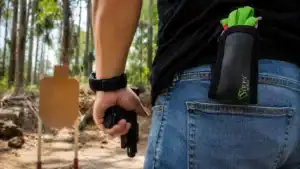
Sticky Holsters was built around a simple idea: a holster that works with the body instead of fighting it. The outer material is a non-slip skin that grips a waistband, clothing, or skin directly, no clips, no loops, nothing rigid pressing at a fixed point all day. With regular use and body heat, that material is designed to conform to a specific firearm gradually, the opposite of most gear that only gets stiffer or less predictable with wear.
Every holster is made in the USA and backed by a lifetime warranty. For carriers who want a clip-free IWB option sized for popular compact to midsize pistols, that fit range covers a large share of the everyday carry population without needing a custom order. Naples, Florida-based and family-run since the company’s earliest days, Sticky Holsters also offers a discount for military, veterans, and first responders who carry as part of their daily work, not just their daily life.
When Comfort Finally Becomes Effortless
The real marker of a working setup is not that it feels good for the first ten minutes. It is that it stops being something to think about, no adjusting, no checking, no mental note to shift weight before standing up.
Getting there usually takes fixing one or two specific things, not replacing an entire setup. Explore the full range of clip-free holsters to find the pieces that solve the exact pressure points causing trouble.