




Concealed carry has grown fast. A 2022 study published in the American Journal of Public Health found that the number of U.S. adults carrying a handgun in a given month nearly doubled between 2015 and 2019, and daily carriers roughly doubled too. That growth means more people than ever are making a daily decision about where a firearm sits against their body, often without ever stopping to test whether that position actually works.
Most people aren’t choosing a carry position. They’re tolerating one. It felt fine standing in a fitting room or at the range, but it becomes a different story sitting at a desk, driving for an hour, or bending down to tie a shoe. Finding the best concealed carry position means understanding that comfort and access aren’t a single fixed answer. They shift with your body, your day, and your clothes.
Why “Best Carry Position” Advice Is Often Misleading
Most online advice treats carry position like a contest with one winner. That approach fails the moment real life gets involved. A position tested standing still at a range says little about how it performs after two hours in a car seat or a full shift on your feet. Comfort and accessibility aren’t opposites you have to choose between. They shift together depending on what you’re doing at that exact moment, and most guides never mention sitting time, driving frequency, or workplace conditions at all.
This is also where the type of holster starts to matter as much as the position itself: rigid, clip-based gear performs the same no matter what you’re doing, while a friction-based design like Sticky Holsters’ has room to adapt as your day changes. The best position isn’t the one that wins in theory. It’s the one with the lowest compromise across your actual routine.
The 3 Variables That Actually Determine Your Ideal Carry Position
Three factors decide whether a carry position actually works for you, and none of them is simply your body type.
Body Mechanics
Torso length, waistline, and hip structure all affect draw angle, which means two people who look similar in build may still need different positions because their posture and movement patterns differ.
Movement Profile
This is how you actually spend your day: a desk job versus an active one, a high sitting ratio versus constant motion, frequent driving versus rare. Most discomfort complaints trace back to a mismatch between position and movement, not a failure of the holster itself. That’s also why a single holster that can move between positions, rather than forcing you to buy a separate rig for every scenario, tends to hold up better through a demanding movement profile. Sticky Holsters builds its modular systems around exactly that kind of flexibility.
Clothing Constraints
This is the silent limiter. Athletic wear allows for one set of positions, structured clothing for another, and seasonal changes shift the equation again. A belt-dependent setup locks you into fewer options than a beltless one, which is exactly where flexible systems start to matter.
Carry Positions Ranked by Real-World Performance
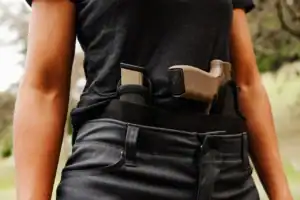
Appendix carry (AIWB) offers fast access and conceals well on slim builds, but comfort drops fast, and it’s sensitive to body-shape changes.
Strong-side hip carry gives balanced comfort and a familiar draw, though it can print when bending and slows down seated access.
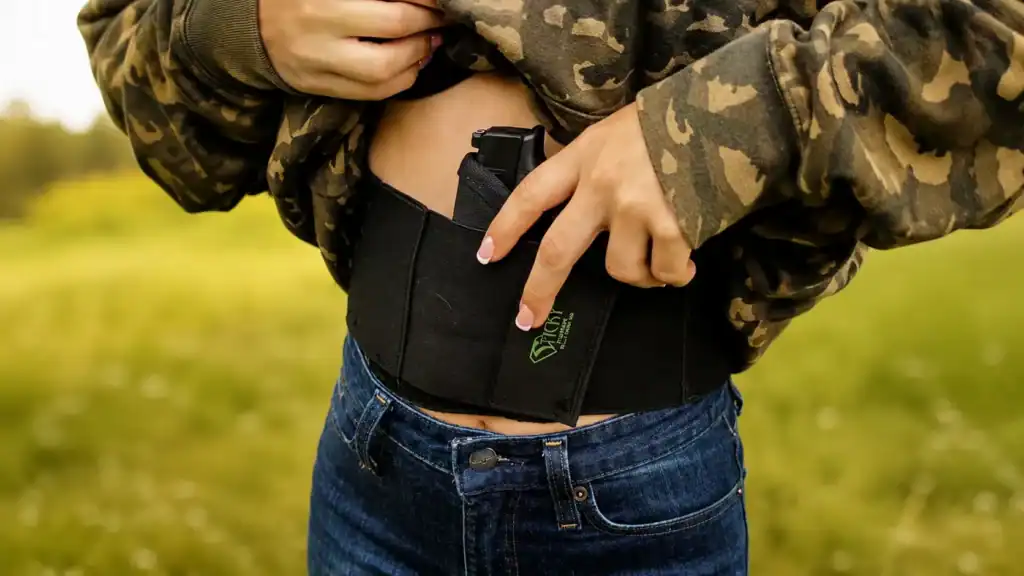
Belly band carry adapts to high, low, appendix, or side placement, works without a belt entirely, and holds up better on movement-heavy days. Sticky Holsters builds a beltless, repositionable option designed around exactly this kind of adaptability.
Ankle carry conceals deeply and suits seated environments well, but access is slow, which makes it a secondary option rather than a primary one. Sticky Holsters also offers a dedicated ankle carry option built for that specific niche use.
No position wins universally. Each wins under specific conditions, which is why a one-size-fits-all recommendation keeps failing people.
Where Most People Get It Wrong
Prioritizing comfort without ever testing access under pressure is the most common mistake, since comfortable and usable are not the same thing. Copying whatever position looks popular online ignores that suitability is personal, not social. Ignoring small angle adjustments is another quiet failure point, since minor shifts change concealment and draw speed more than most people expect.
Using a holster that does not match the carry method rounds out the list. A holster designed for hip carry rarely performs the same way strapped into an appendix position, which is why Sticky Holsters offers a wide range of holsters, fitting micro pistols to full-sized duty pistols, matched to how you actually intend to carry.
How to Find Your Ideal Carry Position
Start by testing your daily movement cycle: sit, stand, walk, and bend, and note exactly where discomfort shows up. Next, evaluate access under real conditions, including a seated draw, one-hand access, and how your clothing interferes. Adjust position before you change gear, since a slight shift in placement can fix a problem that looks like a bigger issue.
Finally, match your holster to your lifestyle rather than just your gun, weighing stability, flexibility, and retention together. Sticky Holsters are built to hold steady through that kind of testing without needing constant readjustment, no matter which size you carry.
The Hidden Role of Holster Design in Comfort and Speed
Friction-based holsters and clip-based holsters solve the same problem in very different ways, and that difference shows up the moment you actually move. A rigid holster forces your body to adapt to it. A flexible one adapts to your movement instead, which affects draw speed more than most people realize.
Sticky Holsters’ clip-free, high-friction material is built around this idea. Instead of hardware holding the holster in place, the material grips clothing or skin directly, letting the same holster move between positions without losing stability. A poor holster can force a bad carry position even when the position itself was the right one, because instability undoes whatever advantage the position offered.
Matching Carry Position to Lifestyle Scenarios
Office or seated work benefits from avoiding pressure points, often through a higher or alternative position. Active, on-the-move jobs need stability more than raw speed, and flexible systems consistently outperform rigid setups here.
Casual or athletic wear makes beltless carry critical rather than optional, which is where Sticky Holsters’ repositionable, beltless systems earn their place for exactly this scenario. Driving and travel demand accessibility while seated and a setup that never traps the firearm against the seat or console.
Quick Self-Assessment: Are You Using the Right Carry Position?
- Can you draw comfortably while seated?
- Do you adjust your holster frequently throughout the day?
- Does your firearm print when you bend?
- Do you avoid certain movements just to protect your concealment?
If you answered yes to any of these, your position is not optimized yet. If several of these sound familiar, testing an adjustable option like Sticky Holsters’ modular systems is usually faster and cheaper than replacing your entire setup.
What Setup Actually Delivers Comfort AND Quick Access?
The real answer is a hybrid approach: position, holster, and clothing working together rather than any single piece carrying the whole job. Adaptability beats rigidity every time real life gets involved, which is exactly why beltless flexibility keeps becoming more important for daily carriers. Shop Sticky Holsters’ full lineup to find a setup built around flexible placement.
Why Concealed Carriers Trust Sticky Holsters
Sticky Holsters builds every holster without clips, loops, or hardware, relying instead on a non-slip, high-friction material that holds position through normal movement and lets you reposition the same holster across carry styles as your day changes.
Every holster is made in the USA and backed by a lifetime warranty, a commitment that only works because the friction material and stitching are built to perform through years of daily carry, not just the first few months.
Find a Carry Setup That Actually Works in Real Life
Comfort and quick access shouldn’t be a tradeoff. The right combination of position and holster design lets you move naturally while staying ready when it matters. Shop Sticky Holsters to find a setup built for the way you actually move.